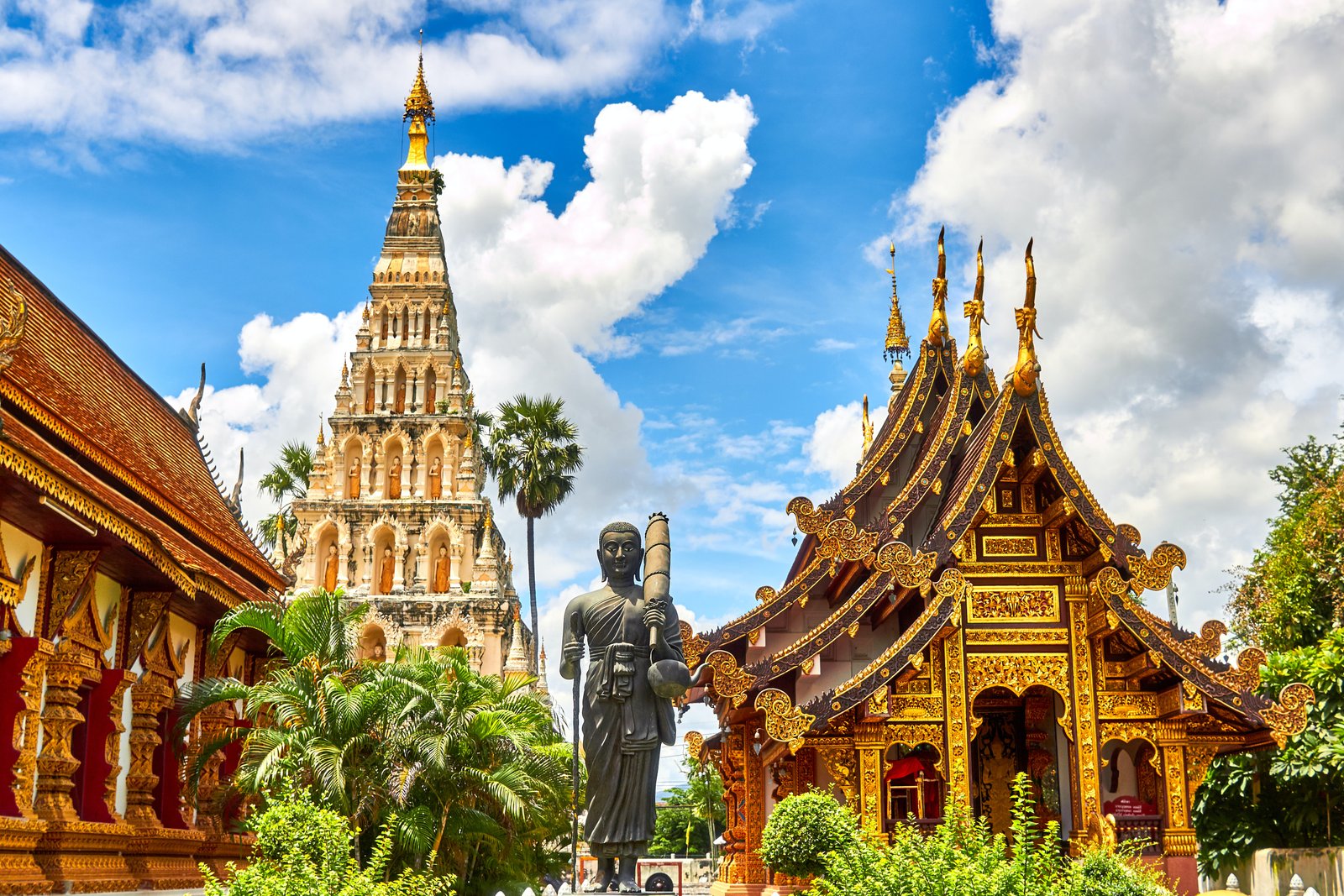
Thailand and Sri Lanka attract very different kinds of travellers — but on the surface, both tick the same boxes: warm weather, beaches, temples, affordable food. The practical differences only emerge when you look at monsoon calendars, internal logistics, and what your passport actually entitles you to at each border. Khobraa puts together fully planned trips to both destinations from Gulf departure cities, handling the sequencing, visa paperwork review, and ground arrangements for Gulf residents — expatriates and nationals alike — travelling from Saudi Arabia, Qatar, Kuwait, Bahrain, the UAE, or Oman.
- What Thailand and Sri Lanka each actually deliver — not just what they look like in photos
- Monsoon timing broken down by coast, so you book the right region for your dates
- Visa requirements assessed by nationality and Gulf residency, not just passport country
- Why Sri Lanka trips need more planning lead time than a standard Thailand package
- What a Khobraa arranged package to either destination includes
Sri Lanka vs Thailand: An Honest Overview for Gulf Expats
Thailand draws visitors at a scale few countries match. That volume produces real advantages: smooth airport logistics, reliable hotel brands at every price point, well-stocked pharmacies, and a tourism industry that has resolved most operational problems. The beach areas around Phuket and Krabi are specifically well-suited to Gulf travellers who want a low-friction holiday: short trip, confirmed resort, done. Bangkok and the northern cities add culture without much difficulty. The whole country is well-signposted in English. Sri Lanka is a different scale and a different experience. The country spans just 65,000 square kilometres, but that area contains high-altitude tea country, ancient ruins older than most European cities, one of the highest leopard densities in Asia, and both a south coast and an east coast with different monsoon windows. The cultural triangle — Sigiriya, Polonnaruwa, Dambulla — is world-class and rarely overcrowded compared to comparable heritage sites elsewhere in Asia. Flying time from Riyadh (RUH), Dubai (DXB), or Doha (DOH) to Colombo runs roughly the same as to Bangkok. From Jeddah (JED) or Dammam (DMM), both destinations connect via standard Gulf hub routing.
What Gulf Residents Get Wrong When Choosing Between These Two
The common mistake is treating this as a beach-versus-culture choice. Thailand has genuine cultural depth — the temples of Chiang Mai and Ayutthaya are not tourist-brochure filler. Sri Lanka has beaches that compare to the best in Southeast Asia. The real differentiators are less obvious and more consequential for planning. Monsoon timing is more complex for Sri Lanka than most articles acknowledge. Thailand's Andaman coast — Phuket, Krabi, Koh Lanta — is reliably dry from November through April, which covers Eid al-Fitr and Christmas school holidays cleanly. Sri Lanka's south and west coast peaks in the same window, but the east coast (Trincomalee, Arugam Bay) flips the calendar entirely, peaking from April through September. Gulf summer holidays — when most expatriate families travel — can actually work for Sri Lanka's east coast, which is a significant planning advantage that most people miss. Thailand's scheduling is more forgiving across the board, which is part of its appeal for first-time visitors. Visa requirements vary by nationality and residency status, not just passport type. Both Sri Lanka and Thailand issue electronic travel authorisations for many Western passports. But if your passport is not from a country with straightforward ETA access, or if you are applying as a Gulf resident rather than from your home country, the rules differ from what general travel sites describe. Visa rules change. We confirm current requirements for your nationality and residency status before you commit to anything. Trip length matters more for Sri Lanka. Thailand's beach areas lend themselves to short stays — four nights in Phuket is a complete trip. Sri Lanka's layout means that trying to cover the cultural triangle, the south coast, and a wildlife park in seven days produces a rushed itinerary. Eight to ten days is the practical minimum.
What Our Package Covers
Khobraa arranges fully planned trips to both Sri Lanka and Thailand from Gulf departure airports. Everything is confirmed before you travel — no provisional bookings, no on-arrival logistics to manage yourself. For travellers who want to combine both destinations, we can design a combined routing if your holiday is long enough.
- Return flights coordination from your Gulf departure city (RUH, JED, DMM, DXB, DOH, KWI, BAH, MCT)
- Hotels at each stop, selected to match the trip type — beach resort, heritage circuit, or combined itinerary
- Ground transfers throughout, including internal transport and domestic connections within the destination
- English-speaking guide for cultural sites, wildlife parks, and excursions where local context adds real value
- Visa and entry documentation review — assessed for your specific passport and country of residency before booking
- Itinerary adjusted for your group: family-friendly pacing, couples configuration, or adult-group format
- Local team contact throughout the trip — same time zone, direct communication, no call-centre routing
Why Book This Instead of Arranging It Yourself
Visa complexity is real for some nationalities. If your passport does not have straightforward ETA access to Sri Lanka or Thailand, the process may involve an advance application or additional documentation. We assess your situation before you book, so complications do not surface at the airport.
Sri Lanka's internal sequencing needs judgment. Which coast, which season, what order to visit the cultural triangle — getting this wrong means a rushed itinerary or a wet beach week. We have put together enough of these trips to know what a good eight-day Sri Lanka circuit looks like versus a twelve-day one.
Thailand group departures on fixed Gulf holiday dates. If you want a confirmed group departure during Eid or international school holidays rather than a fully custom arrangement, we maintain a Thailand group calendar with fixed dates. Sri Lanka trips are arranged as custom itineraries on request.
Invoice in local Gulf currency. Payments settled in Saudi riyals, UAE dirhams, or Qatari riyals — no foreign processing, no conversion uncertainty, and full documentation if your employer covers international travel as part of a benefits package.
Best Time to Go
For Thailand, the most reliable window from the Gulf is November through April. The Andaman coast — Phuket, Krabi, Koh Lanta — is dry and calm during this period, which covers both the Eid al-Fitr break and the December and February school holidays. The Gulf of Thailand coast, including Koh Samui and Koh Phangan, runs on a different rainfall pattern: its driest months run roughly January through August, with October and November being wet. If you are travelling at Christmas and want a beach focus, Phuket or Krabi is the cleaner choice. The shoulder months of October and November on the Andaman coast can bring rain but also lower prices and fewer visitors — usable for travellers who are flexible. Bangkok and northern Thailand are less affected by coastal monsoons and can be visited year-round, with March and April being the hottest months.
For Sri Lanka, the timing depends entirely on which part of the country you are visiting. The south and west coast — Galle, Mirissa, Unawatuna, Tangalle — peak from December through March, lining up well with Christmas and New Year. The cultural triangle inland (Sigiriya, Polonnaruwa, Dambulla) is accessible year-round, though March to April and September to October are considered the most comfortable months temperature-wise. The east coast — Trincomalee, Batticaloa, Arugam Bay — peaks from April through September, which directly overlaps with Gulf summer school holidays. This east-coast window is one of the strongest practical reasons to consider Sri Lanka for summer travel: it is a genuinely good beach destination during the same period that Thailand's Andaman coast is at its wettest. If you are booking a Sri Lanka trip and have not checked which coast and which season match your dates, that is the first thing to resolve.
Practical Notes for Gulf Residents
Visa — Sri Lanka: Most Western passport holders apply for an Electronic Travel Authorisation online; approvals are typically issued within 24 hours. The applicable fee and documentation requirements depend on your passport nationality, and rules are updated periodically. Gulf residency status can affect requirements for some nationalities.
Visa — Thailand: Thailand offers visa-on-arrival and an online pre-arrival authorisation option for many nationalities. Eligibility is determined by passport, not residency. Some nationalities require an advance visa application submitted to a Thai consulate before travel.
Departure airports: Both destinations are served from Gulf hubs. Riyadh (RUH), Jeddah (JED), Dammam (DMM), Dubai (DXB), Doha (DOH), Kuwait City (KWI), Bahrain (BAH), and Muscat (MCT) all have routing options to both Colombo and Bangkok. Total travel time is comparable for both destinations.
Trip length: Thailand beach trips work well in five to seven nights. Sri Lanka benefits from eight to ten days minimum; a shorter trip requires real trade-offs on what you can cover. We build the itinerary around your available dates before confirming the structure.
Currency on the ground: Both Sri Lanka and Thailand are predominantly cash-friendly in markets and smaller restaurants, with card acceptance at hotels and established venues. ATMs are widely available in tourist areas of both countries. Your Khobraa package is paid in Gulf currency before departure.
Sri Lanka vs Thailand: A Gulf Expat Planning Guide for 2027: Common Questions From Gulf Residents
Thailand and Sri Lanka are both worth booking — but they are not interchangeable, and picking the wrong one for your travel style wastes your annual leave. Thailand delivers low-friction tropical travel with well-tested logistics and a beach-resort model that suits short Gulf holidays cleanly. Sri Lanka suits travellers who want more range: wildlife, ruins, tea country, and coast in a single trip, with fewer crowds than Southeast Asia's most visited destination. The practical details — your passport, your dates, your group composition — are what actually determine which one works. That conversation takes ten minutes and saves a lot of second-guessing.