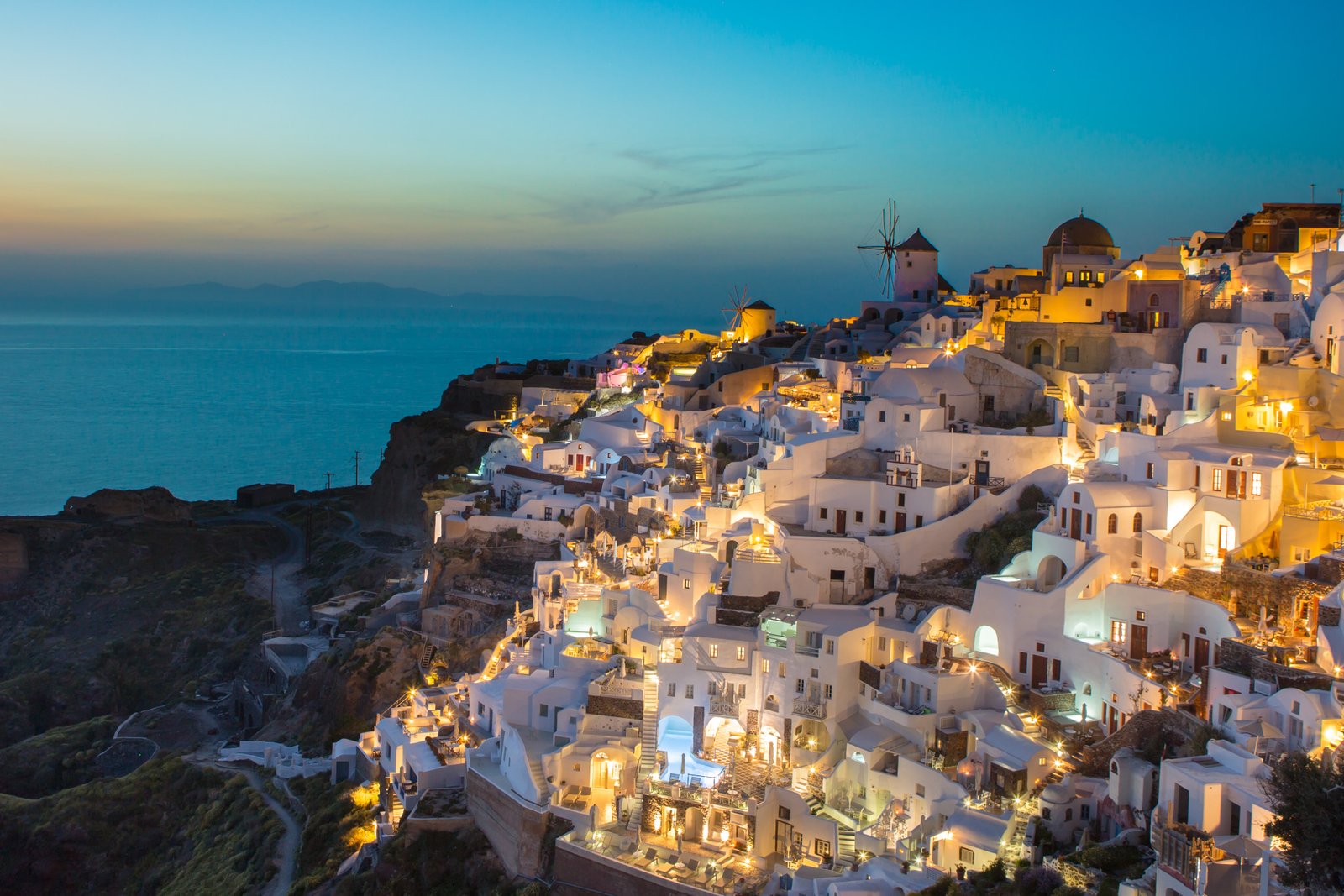
This page compares Greece and Italy as Schengen destinations for Gulf families — covering the visa logistics, practical differences when travelling with children, the best time to go from Gulf departure airports, and what a managed itinerary includes. It is aimed at families based in Saudi Arabia, the UAE, Qatar, Kuwait, Bahrain, Oman, or elsewhere in the GCC who are planning a Mediterranean holiday and want a straight answer on which destination fits their specific situation.
- Schengen visa logistics explained for Gulf residents applying as third-country nationals
- Side-by-side comparison of Greece and Italy for families travelling with children
- Seasonal guidance tied to Gulf school holiday windows including Eid and half-term
- What a managed package covers and why it matters for a split-country itinerary
- Five real questions Gulf families ask when choosing between the two destinations
Greece vs Italy for Gulf Families: A Practical Overview
Greece and Italy both belong to the Schengen area. Gulf residents need the same visa category for either trip. What differs is the consulate you apply through — you file with the embassy of the country where you spend the majority of your nights. A straightforward Greece-only trip means the Greek consulate. A Rome and Amalfi itinerary means the Italian consulate. Split evenly across both countries, the rules specify you apply through the country of first entry. This matters because consulate appointment availability, processing times, and supporting document expectations can vary between embassies in Riyadh, Jeddah, Dubai, Doha, Kuwait City, Bahrain, or Muscat depending on your country of residence. Beyond the visa logistics, these are fundamentally different holidays. Greece means islands, ferries, slower days, and archaeological sites that do not require full-day walking marathons. Italy means cities, density, a higher daily pace, and a planning complexity that catches families off guard. Both are excellent destinations. The question is which suits your family's travel style, the number of days you have, and the school holiday window you are working around.
Schengen Visas from the Gulf: What Third-Country Nationals Need to Know
The Schengen visa process from Gulf countries is the same visa category regardless of destination, but applying from Saudi Arabia, Qatar, Kuwait, or the UAE as a third-country national is not the same as applying from your passport country. Your residency status, the type of residence permit you hold, and how long you have been resident in the Gulf can all affect what supporting documents an embassy expects to see. Saudi-based applicants apply through the relevant embassy in Riyadh or Jeddah. UAE-based applicants use the embassy in Abu Dhabi or the consulate in Dubai, depending on the country. Doha, Kuwait City, Bahrain, and Muscat each have their own embassy access points with varying appointment availability across peak travel seasons. For a Greece-Italy combined itinerary — which many Gulf families consider in order to cover both countries in one trip — the consulate question becomes more complex. Four nights in Greece and three in Italy means applying through Greece. The reverse means applying through Italy. Planning to enter Greece first regardless of night count means using the Greek consulate. This is the point where families relying on self-research often get confused, miss appointment windows, or discover they applied at the wrong embassy and need to start over — sometimes within a narrow school holiday window that does not allow for that delay. Visa rules change. We confirm current requirements for your nationality and residency status before you commit to anything.
What Our Package Covers
Our Greece and Italy family packages handle the planning so you arrive without the logistics overhead. A typical managed itinerary for a Gulf family covers the following, whether you are booking one country or combining both.
- Visa file preparation and consulate guidance specific to your nationality and Gulf residency type
- Return flights coordination from your departure city — RUH, JED, DMM, DXB, DOH, KWI, BAH, or MCT
- 4- and 5-star hotel selection with confirmed family room configurations at each destination
- All inter-city and inter-island transfers, including ferry bookings for Greek island itineraries
- English-speaking local guide for city tours, historical sites, and day excursions
- Curated halal dining recommendations at each stop on the itinerary
- Full day-by-day itinerary document with logistics, contacts, and contingency notes
Why Book This Instead of Arranging It Yourself
Schengen file prepared correctly: Gulf residents applying as third-country nationals face document requirements that go beyond the standard checklist. We prepare and review each file based on your specific nationality, residency type, and travel history before submission, so the application reflects your actual situation.
Combined itinerary logistics resolved upfront: A Greece-Italy split means two sets of transfer logistics, a consulate decision that depends on your exact night count, and an entry sequence that affects the whole trip. We build the itinerary so the visa application, entry point, and accommodation sequence all align from the start.
School holiday departure windows: We plan group and private departures around the GCC international-school calendar — half-term, Eid, National Day, and summer — so flights and hotels are secured before the peak booking rush that hits Gulf departure cities every major holiday.
Local company, your time zone: You pay in local currency, communicate with staff in your time zone, and deal with a Saudi-registered agency with local legal accountability. That matters when something changes at short notice before a family holiday abroad.
Best Time to Go
For Greece, the strongest windows for Gulf families are May through early June and September through October. July and August see the islands at peak European tourist volume, with heat that is manageable on the water but tiring inland, and ferry bookings that fill weeks in advance. Santorini, Mykonos, and Crete are all workable in summer with advance planning, but families travelling with younger children consistently find the shoulder months more comfortable and less crowded. The summer school holiday from Gulf international schools typically runs mid-June to late August, overlapping with peak season — this is viable but requires booking three to four months ahead, not one.
Italy in July and August means city heat that makes Rome, Florence, and Venice genuinely tiring for families with children under ten. The Amalfi Coast and Sicily are more bearable at the beach but extremely crowded. May, June, and September are the strongest months for family travel to Italy — comfortable temperatures, manageable queues, and the full range of sites accessible without the summer crush. For Gulf families using the Eid Al-Adha window, which typically falls in June or July depending on the year, both destinations are viable but demand confirmed bookings well in advance. The Christmas school break and February half-term are increasingly popular alternatives for both countries, particularly for families who want the cultural experience without the summer heat and crowds.
Practical Notes for Gulf Residents
Visa and residency: Both Greece and Italy require a Schengen Type C visa for most GCC-based residents. Requirements depend on your passport nationality AND your Gulf residency type — not nationality alone. Apply at the consulate of the country where you spend the majority of your trip nights.
Gulf departure airports: Connecting services to Athens and Rome operate from Riyadh (RUH), Jeddah (JED), Dammam (DMM), Dubai (DXB), Doha (DOH), Kuwait City (KWI), Bahrain (BAH), and Muscat (MCT). Flight time is typically five to eight hours depending on routing and connection city.
Halal food availability: Both countries have halal-certified restaurant options in major tourist areas, though availability varies significantly by city and island. Athens, Rome, Florence, and Milan have established halal dining. Smaller islands and rural Italian areas require more forward planning.
Travelling with children: Greece's islands suit younger children well for a relaxed beach focus with manageable daily distances. Italy's major cities involve sustained walking and long queues at major sites; advance booking of skip-the-line access matters considerably when travelling with children under ten.
Currency: Both countries use the euro. Card payments are widely accepted at hotels, restaurants, and major sites. Carrying some cash is useful for ferries, smaller island vendors, and local markets in both countries.
Greece vs Italy: The Real Comparison for Gulf Families: Common Questions From Gulf Residents
Greece and Italy are both strong choices for Gulf families with a Schengen visa in hand — or planning to get one. They are not interchangeable destinations, and the right answer depends on your children's ages, the number of days available, and how much on-the-ground logistics your family wants to manage. A combined trip is possible and popular, but it needs to be built carefully from the start so the visa application, entry sequence, and accommodation plan all align correctly. Contact us to go through your dates, your family's travel style, and which option actually fits your next trip.