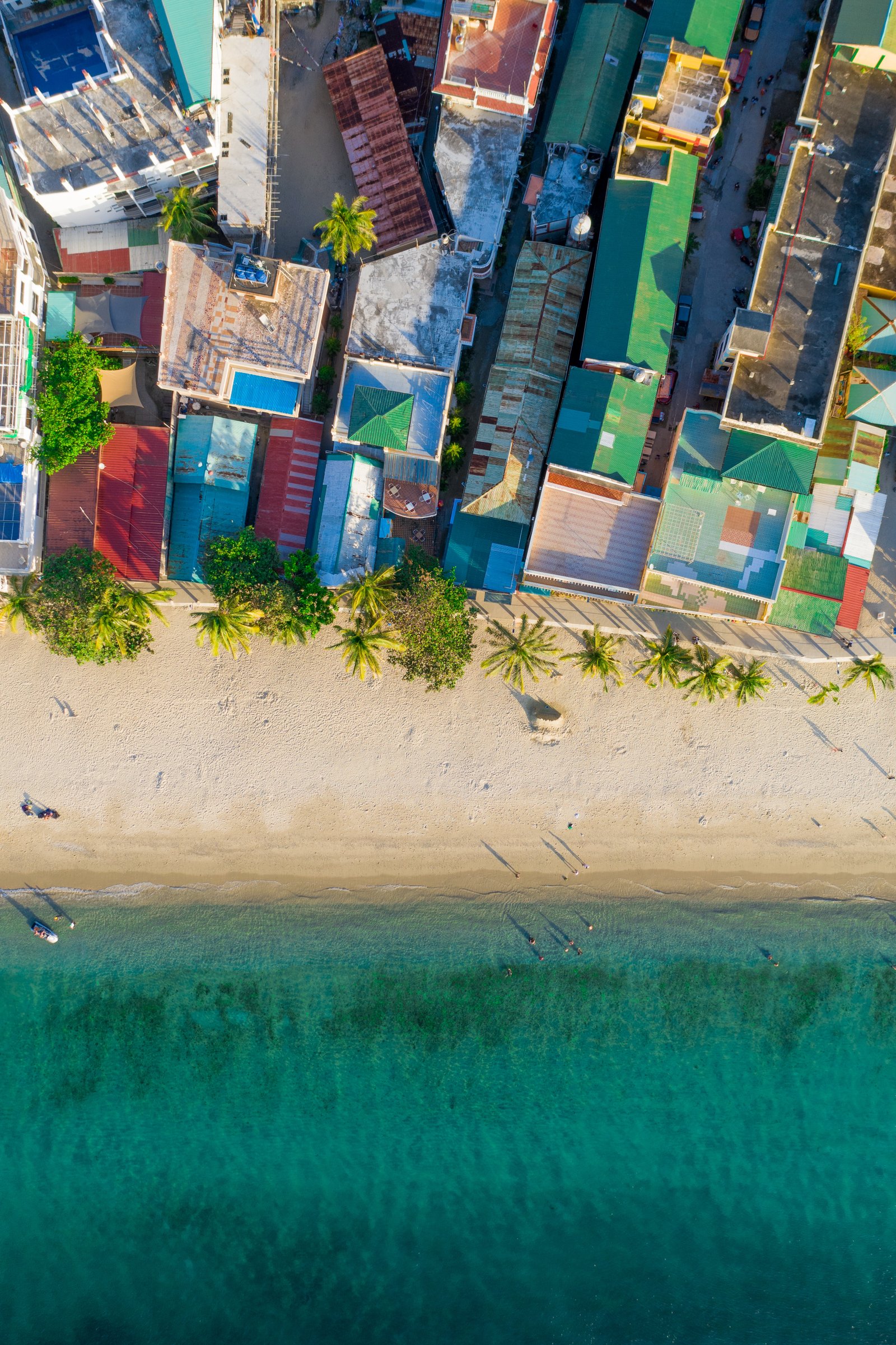
This page compares the Philippines and Indonesia as trip destinations for Gulf residents — expats on international-school calendars, Gulf nationals traveling on English-language itineraries, and couples looking for a proper island break. Both are strong options. But they work differently depending on your travel dates, group size, and what the trip needs to deliver. We handle the full planning for either destination: accommodation, transfers, activities, and the visa paperwork check that's easy to overlook when a group is traveling on three different passports.
- Direct comparison of Philippines and Indonesia for Gulf departure points
- Visa and entry requirements by passport nationality and Gulf residency
- Best travel windows aligned with Saudi and UAE school holidays
- Multi-nationality group logistics handled before you travel
- Package itineraries for both destinations, built from your actual dates
Philippines vs Indonesia: What the Comparison Actually Looks Like
The Philippines is an archipelago of over 7,000 islands, with Palawan, Boracay, and Cebu doing most of the work for first-time visitors. It is the only Southeast Asian country where English is a national language — not a tourist-industry overlay, but the actual language of the education system and media. That matters when you are navigating island transport, dealing with a boat cancellation, or asking a local for directions. Indonesia is the fourth most populous country in the world, and Bali is a small fraction of it. Bali works as a base because it concentrates temples, rice terraces, beaches, and a mature tourism infrastructure in one accessible island. Lombok sits next door and offers much of the same landscape with fewer crowds. Komodo belongs in a separate, longer itinerary. For Gulf residents, both destinations are achievable in a nine-day school-holiday window. The Philippines suits a beach-focused trip. Indonesia covers more ground on a mixed beach-and-culture itinerary. Both require planning around visa rules that depend on your passport and your country of Gulf residency — not just one or the other.
The Part Most Comparison Articles Skip
Most articles compare beaches and accommodation costs. The part that matters for Gulf expats is different. The Philippines offers visa-free entry for many Western passport holders — typically 30 days on arrival with no advance application. For Gulf nationals from Saudi Arabia, Qatar, Kuwait, Bahrain, Oman, or the UAE, entry rights depend on passport nationality. Some GCC passport holders receive a free arrival stamp; others require a visa arranged in advance. What immigration checks at the counter is your passport — but your Gulf residency determines where you apply from, and the options available to you as a third-country national rather than someone applying from their home country. Indonesia offers a visa on arrival for a wide range of nationalities at major entry points. It is a paid visa, presented in cash or card at the immigration counter. Some nationalities also have the option to apply for an e-visa before travel, which speeds up arrival considerably. The process is practical, but it varies by passport. A group of four traveling together might hold three different passports, each with slightly different requirements. Visa rules change. We confirm current requirements for your nationality and residency status before you commit to anything. This is not a theoretical risk. It is the single most common source of last-minute confusion for Gulf expat groups traveling with mixed nationalities.
What Our Package Covers
Our Philippines and Indonesia packages are built around Gulf departure realities: school-holiday windows, mixed-nationality groups, and travelers who want a planned itinerary rather than a collection of separate bookings to manage. Here is what is included in a standard trip.
- Airport and inter-island transfers, coordinated around your actual arrival time
- Accommodation matched to itinerary, group size, and travel style
- Activities and island-hopping day trips arranged in advance, not improvised on arrival
- English-speaking local coordination in destination
- Visa requirements confirmed for each traveler's passport and Gulf residency combination
- Pre-trip planning call to lock in logistics, school-calendar dates, and headcount
- Single contact number during travel — same time zone, Arabic and English
Why Book This Instead of Arranging It Yourself
Multi-nationality group logistics A family where each person holds a different passport — common in Gulf expat circles — requires a separate entry check for each traveler. We run that before anything is confirmed, not after flights are booked.
Gulf departure coordination We plan ground itineraries around actual arrival windows from RUH, JED, DXB, DOH, and other Gulf airports. Connection times and arrival hours vary; we factor that into the schedule rather than assuming a standard check-in time.
School-holiday calendar matching International schools across Saudi Arabia, Qatar, and the UAE do not share a single calendar. We plan around your specific school's dates — not a generic regional window that may be off by three days.
Single contact, full coverage One number, same time zone, available in Arabic and English. If something changes mid-trip — a weather closure, a hotel issue, a domestic transfer delay — you are not filing a support ticket with an overseas booking platform.
Best Time to Go
The Philippines has a clear dry season: November through April. Palawan and Boracay are at their best from December to March — low humidity, calm seas, consistent sun. Typhoon season runs roughly June through October, with August and September carrying the highest risk. If your school holiday falls in July or August, the Philippines becomes a serious gamble. Cebu and some northern islands have a slightly different weather pattern, but the risk does not disappear. For the Saudi National Day break in late September, weather is transitional — possible but worth checking against forecasts.
Indonesia is more variable by island. Bali's dry season runs April through October, which makes it the stronger Southeast Asia option for the summer school break. Lombok mirrors Bali's weather closely. The wet season — November through March — brings daily rain, typically in short afternoon bursts rather than all-day downpours. Bali remains functional in wet season, but beach days become unpredictable. For the Christmas and New Year break, both Bali and the Philippines are heavily booked: accommodation fills fast in December, and prices reflect that. Plan and confirm early if the December window is your target.
Practical Notes for Gulf Residents
Visa and residency: Entry rules depend on your passport nationality and your Gulf residency country — not one alone. Western passport holders (EU, UK, US, Australian) typically have straightforward arrivals at both destinations; Gulf nationals should confirm in advance. We run that check for every traveler in the group.
Flight time from the Gulf: Both destinations are roughly 7 to 9 hours from Dubai, Riyadh, or Doha. Connection options vary by departure city; we build the ground itinerary around your actual arrival window.
Departure airports we plan from: Riyadh (RUH), Jeddah (JED), Dammam (DMM), Dubai (DXB), Doha (DOH), Kuwait City (KWI), Bahrain (BAH), and Muscat (MCT). Tell us your city and we work from there.
School-holiday windows: International school calendars across the GCC do not align exactly. We confirm your specific school's dates before building any itinerary — the difference of three days can shift the entire trip.
Trip length: Seven nights is the minimum worth considering; nine nights is the practical standard. Both destinations have a real travel day each way, and shorter trips spend too much of the holiday in transit.
Philippines vs Indonesia for Gulf Expats: Plan the Right Trip: Common Questions From Gulf Residents
Both destinations work well for Gulf residents on school-holiday calendars. The decision usually comes down to weather windows, group composition, and what the trip is actually for. The Philippines is the stronger choice for a beach-first itinerary and for groups who want English everywhere they go. Indonesia covers more ground on a mixed beach-and-culture trip, and Bali holds up better during the summer school break. The multi-nationality visa logistics, the school-calendar matching, the departure coordination — these are what we handle. If you have been going back and forth between the two, a short conversation usually settles it. Tell us your dates, your passport nationalities, and your group size.